Daughter of Persia- A Celebration of Heroic
Women Through Illustration
10 illustrated posters celebrating heroic female figures from Zoroastrian mythology, Persian epic poetry, and medieval history. Each woman gets her own colour world. Together they form one visual system.
The concept
Persian heroines exist across 2,500 years of culture. But they are rarely seen.
From Zoroastrian scripture to Ferdowsi's Shahnameh to medieval poetry — extraordinary women appear throughout Persian history. This series makes them visible. Each poster follows a consistent system: a hand-drawn pencil figure in white robes, centred in a flat illustrated landscape specific to her story, with her name in script at the bottom.
Details
Type Bachelor's thesis
Institution Vistula University, Warsaw
Year 2026
Scope 10 illustrated posters
Technique Pencil + flat digital
Supervisor mgr Anna Dybowska
The visual system
-
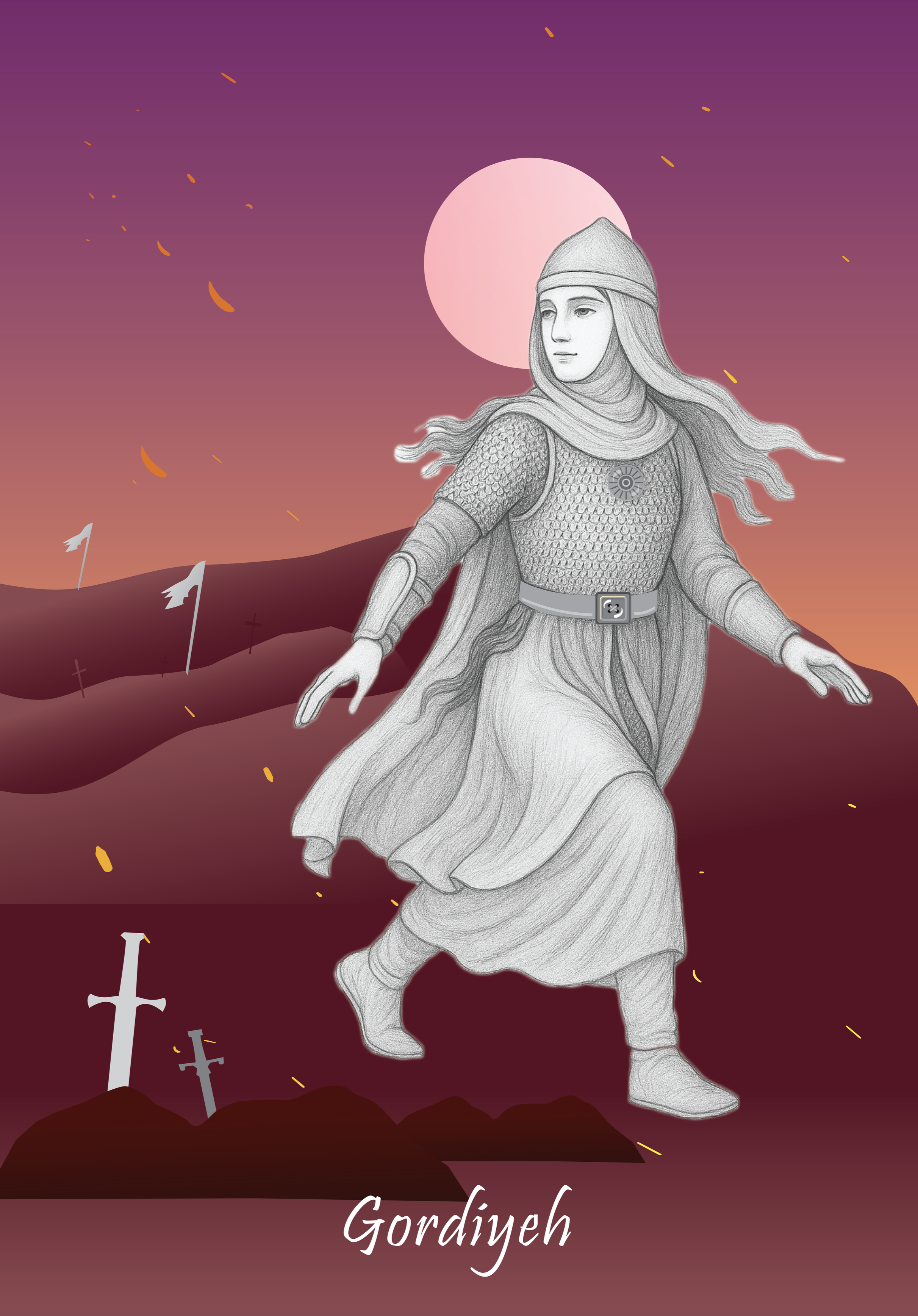
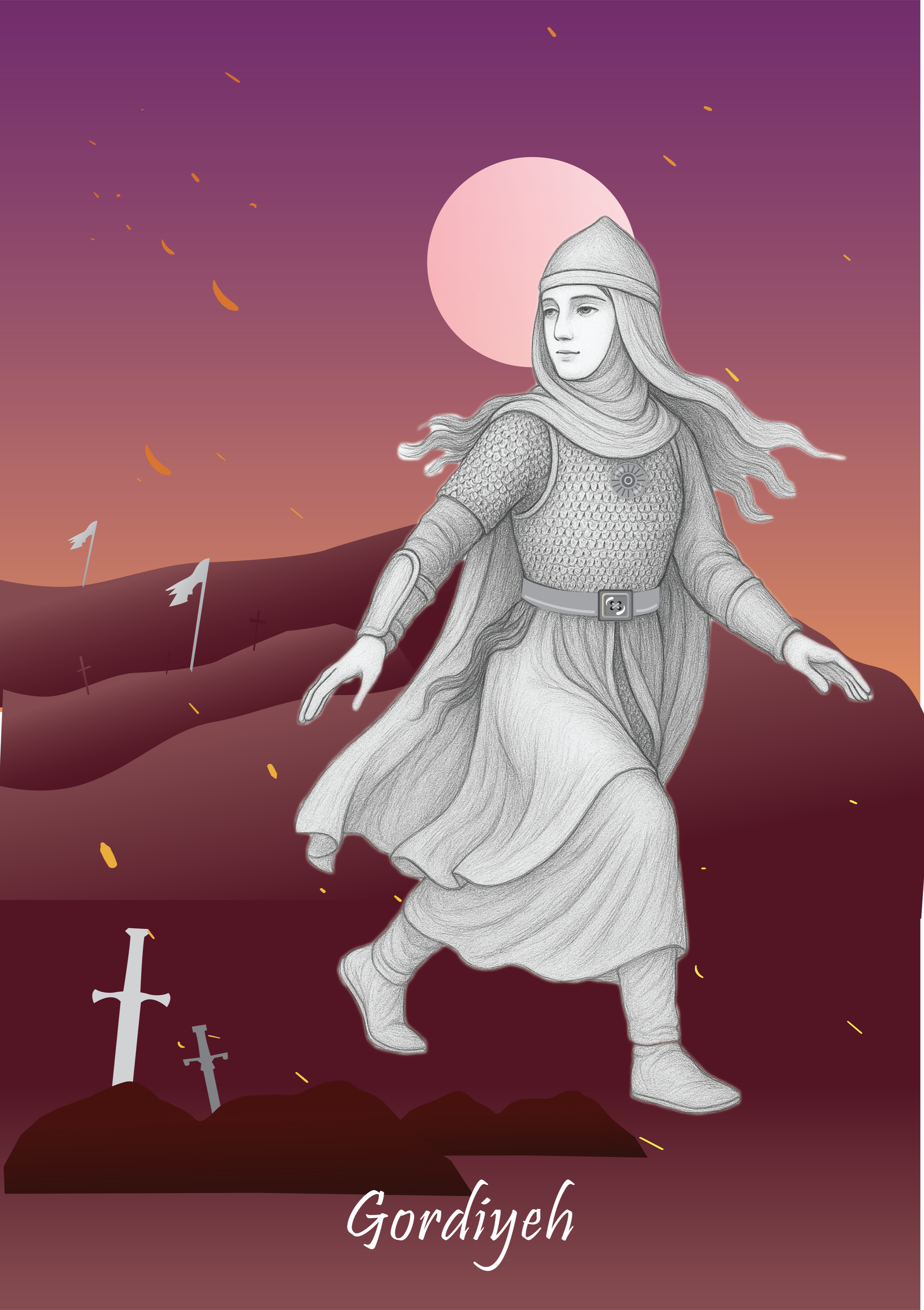
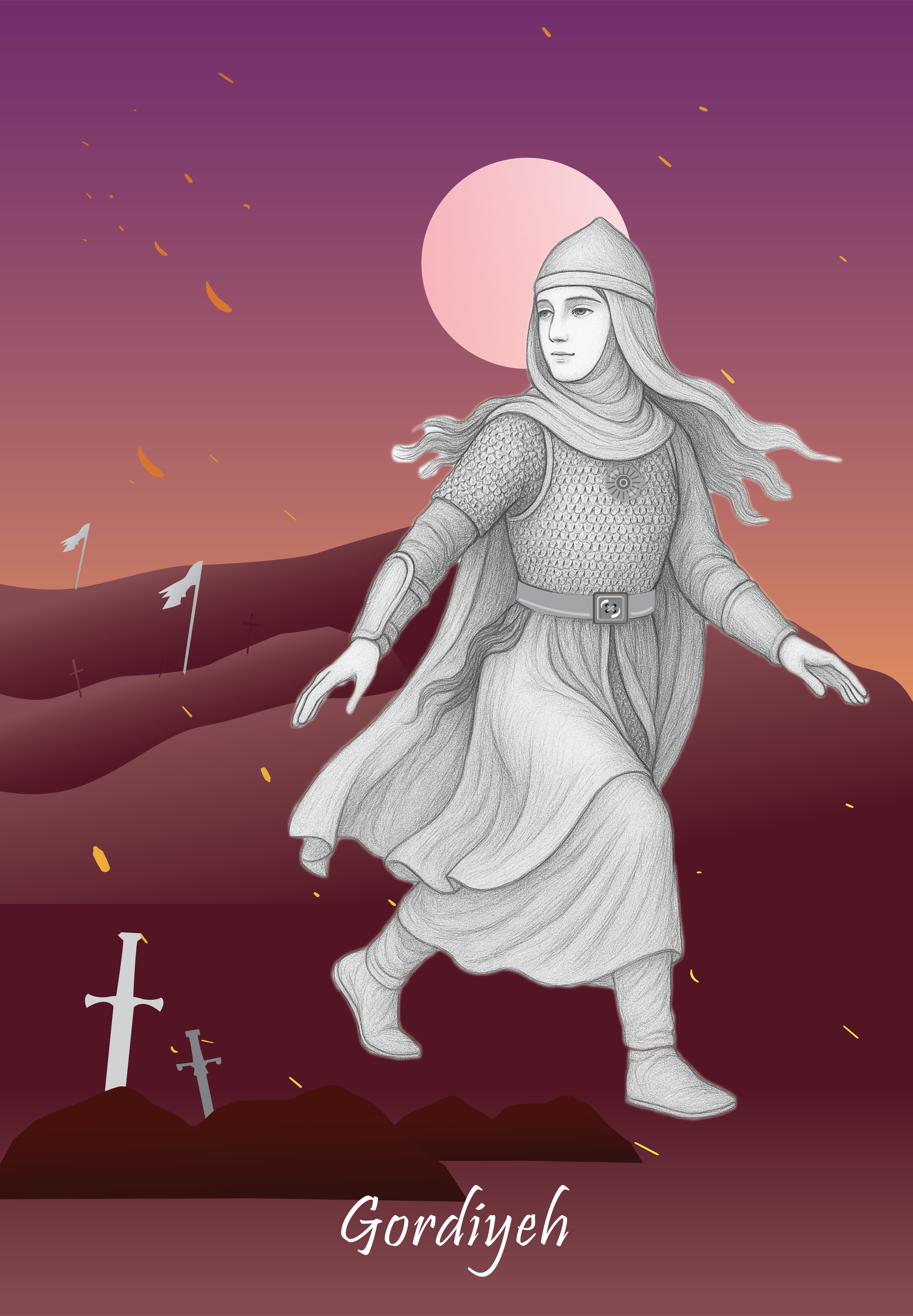
Gordiyeh
Warrior princess. She chose her own path.
-
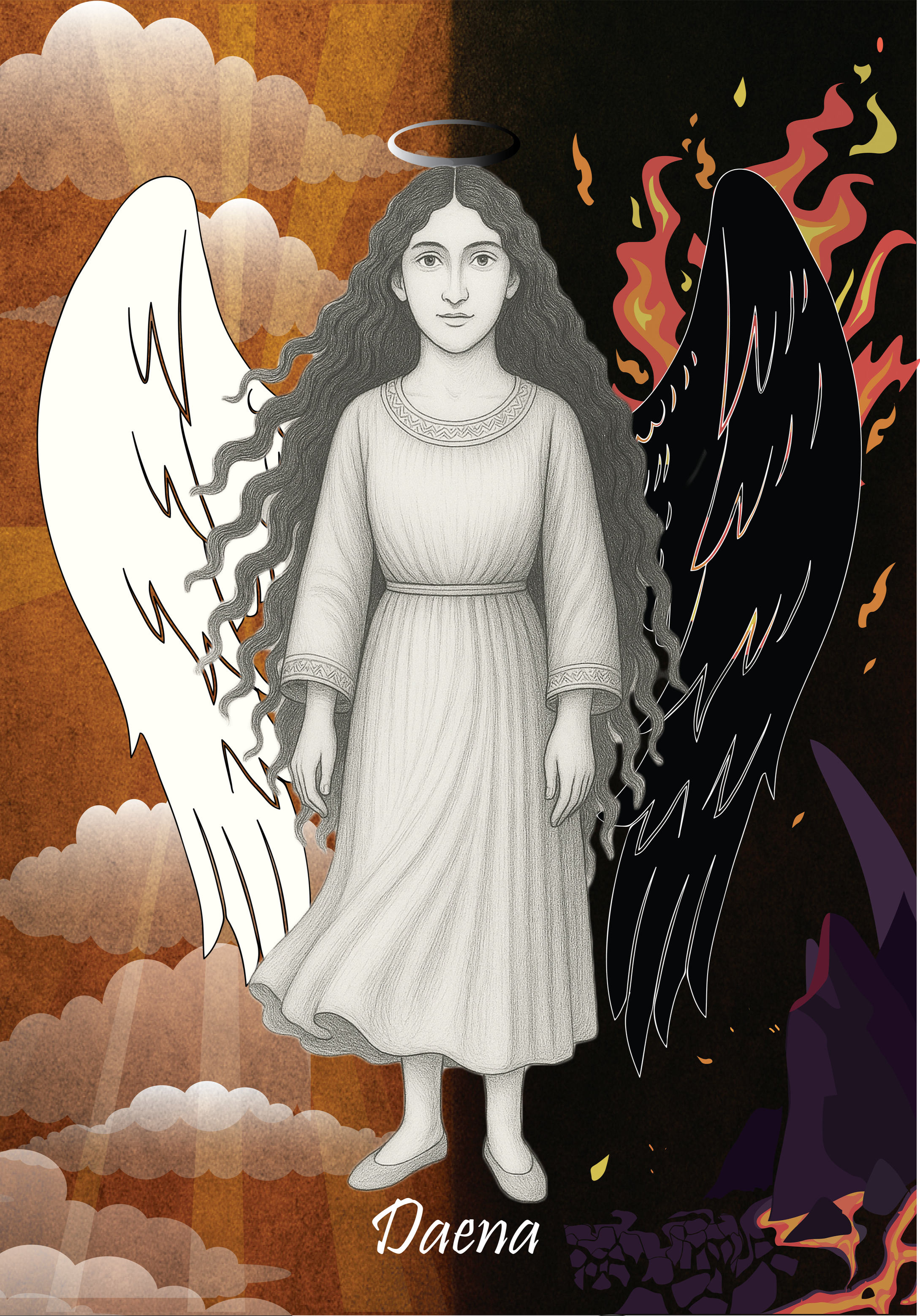
Daena
Conscience. One white wing, one black.
-
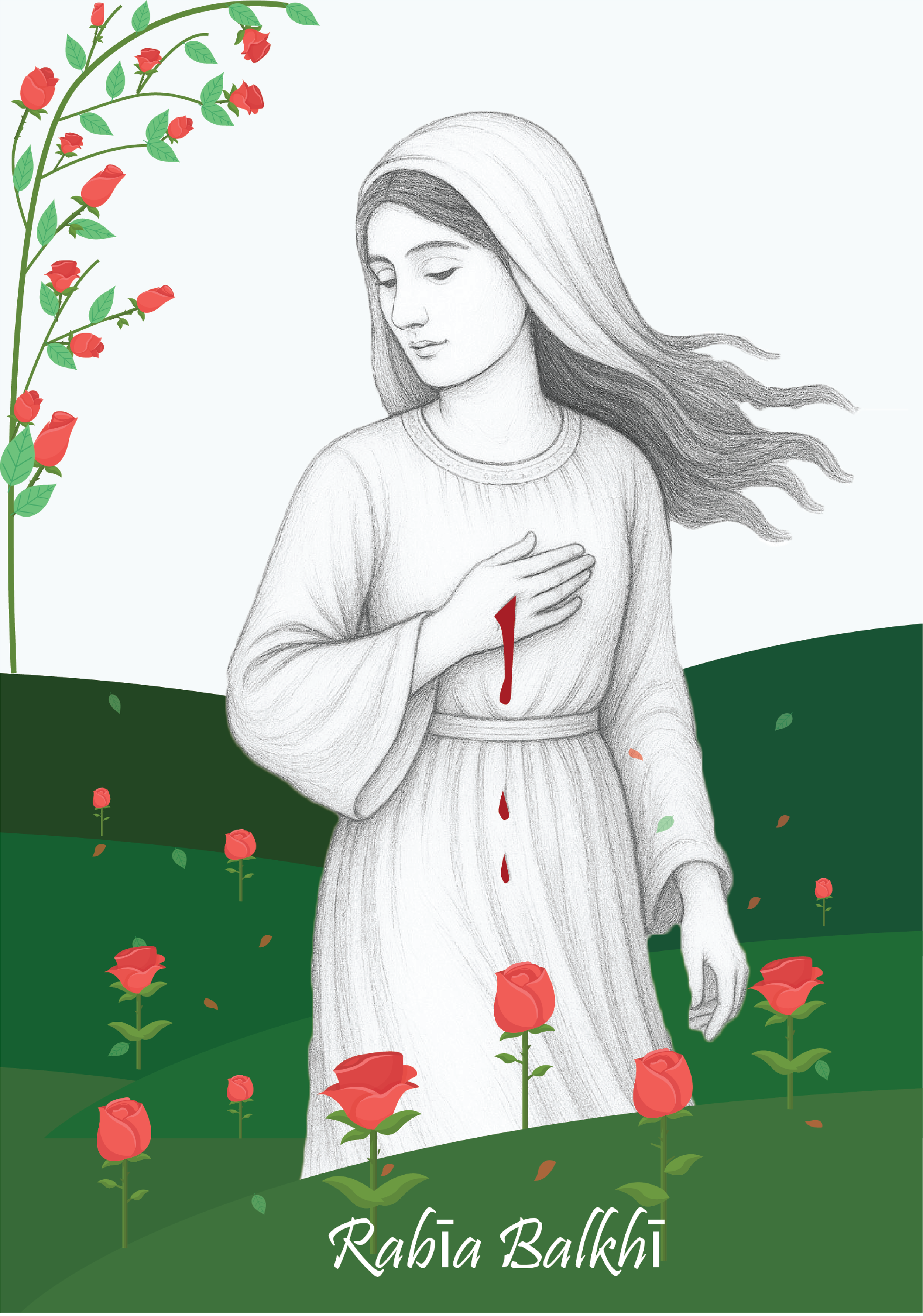
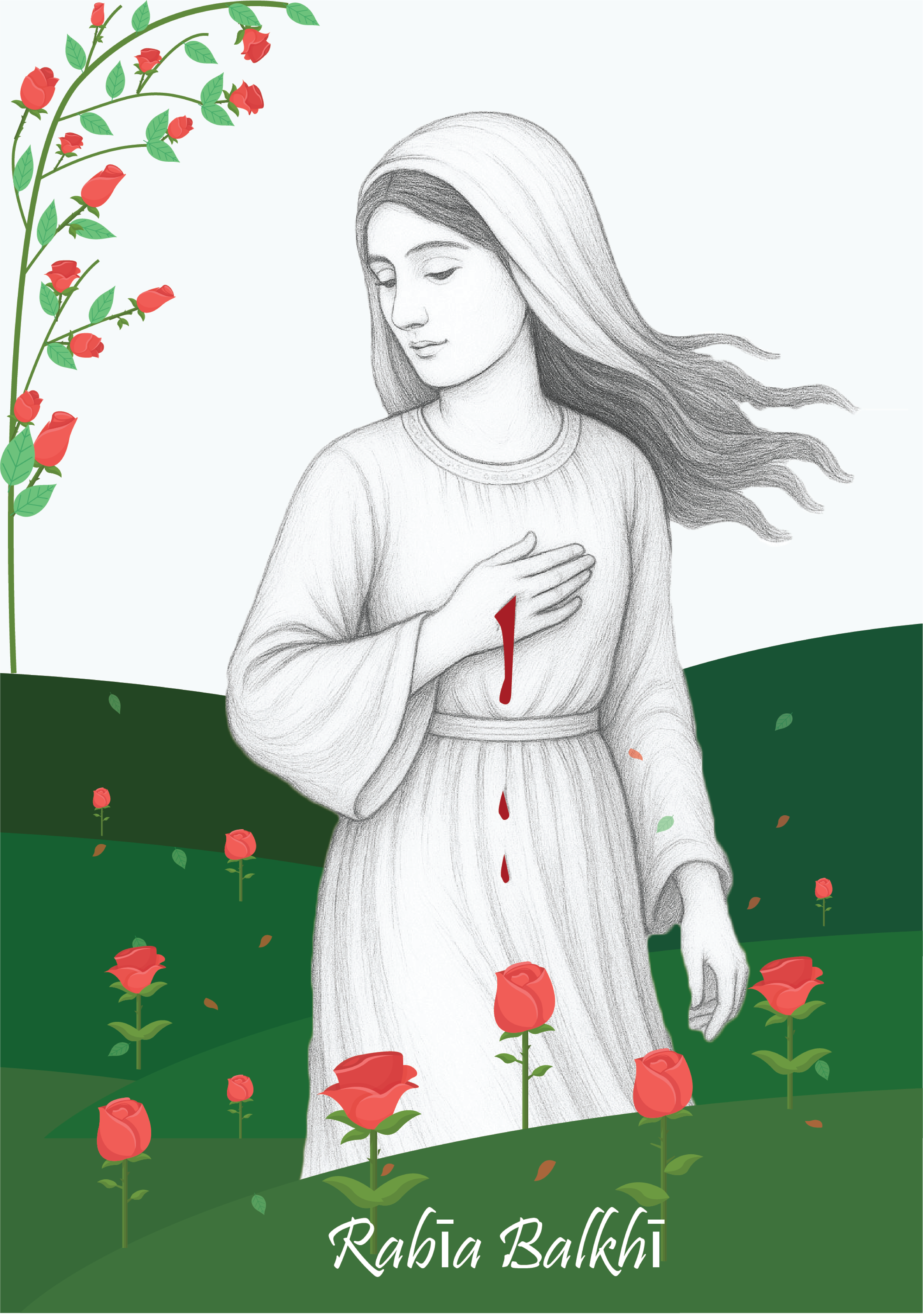
Rabīa Balkhī
First woman poet in Persian. Wrote in blood.
-
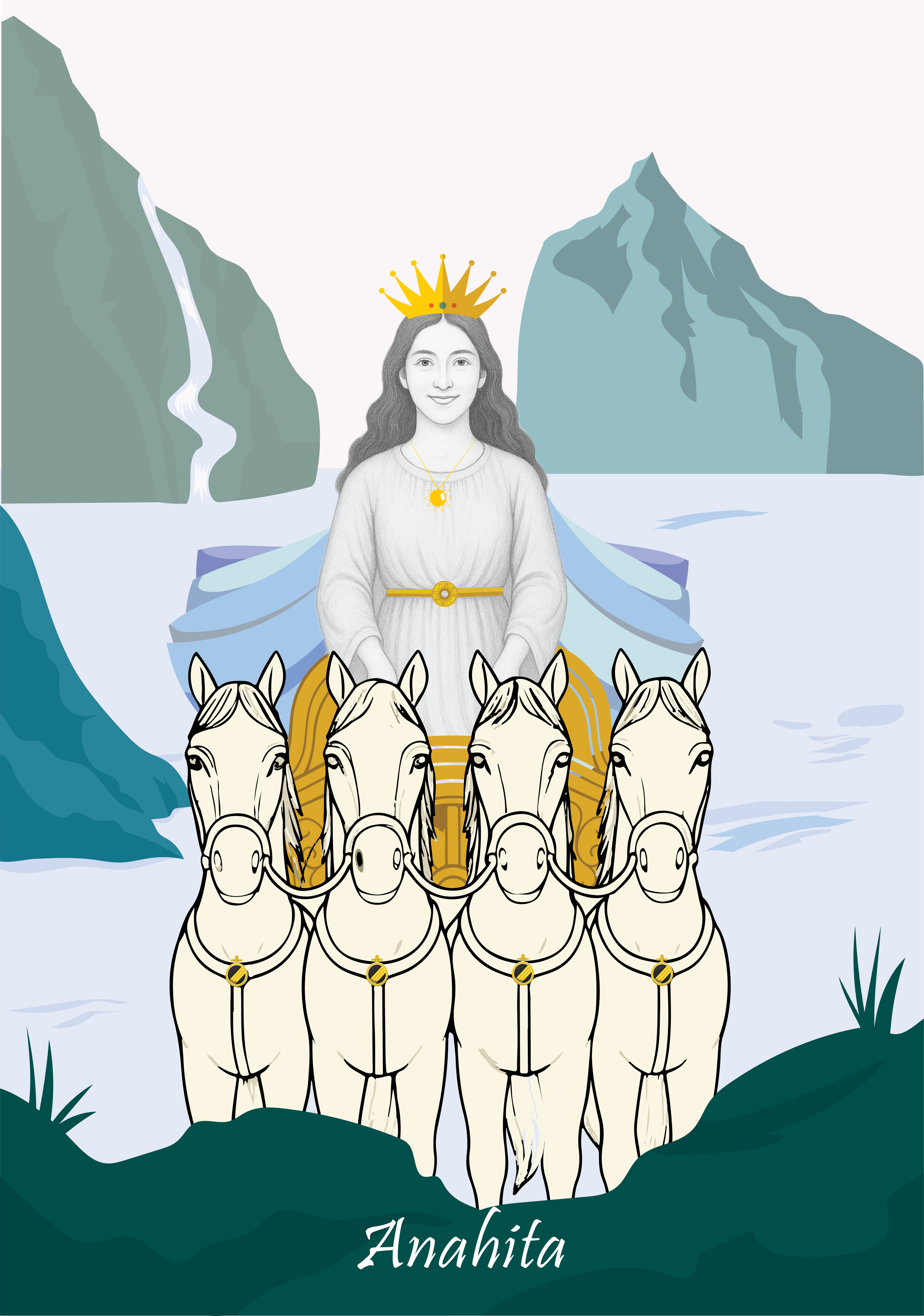
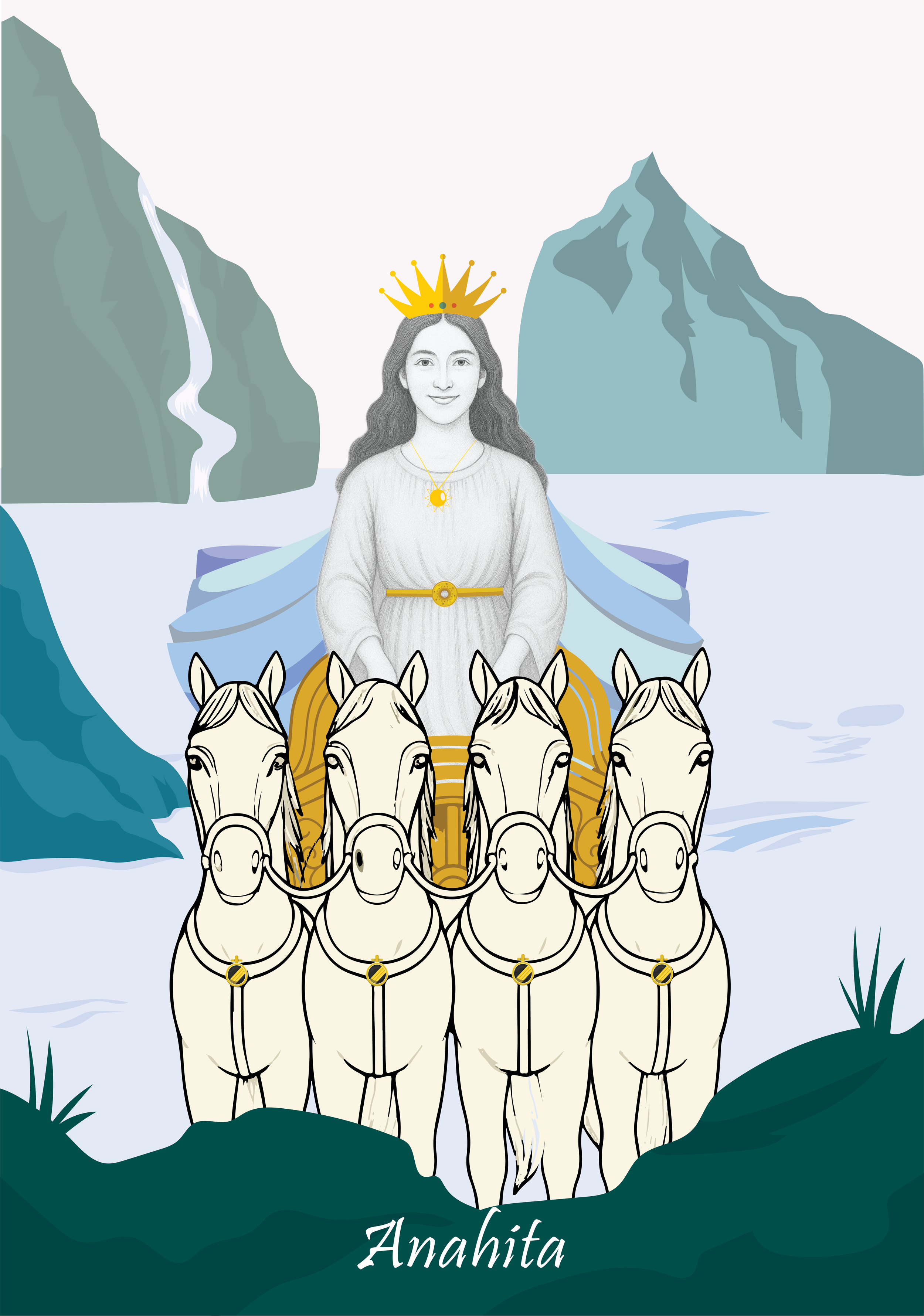
Anahita
Goddess of water. Rides four white horses.
-
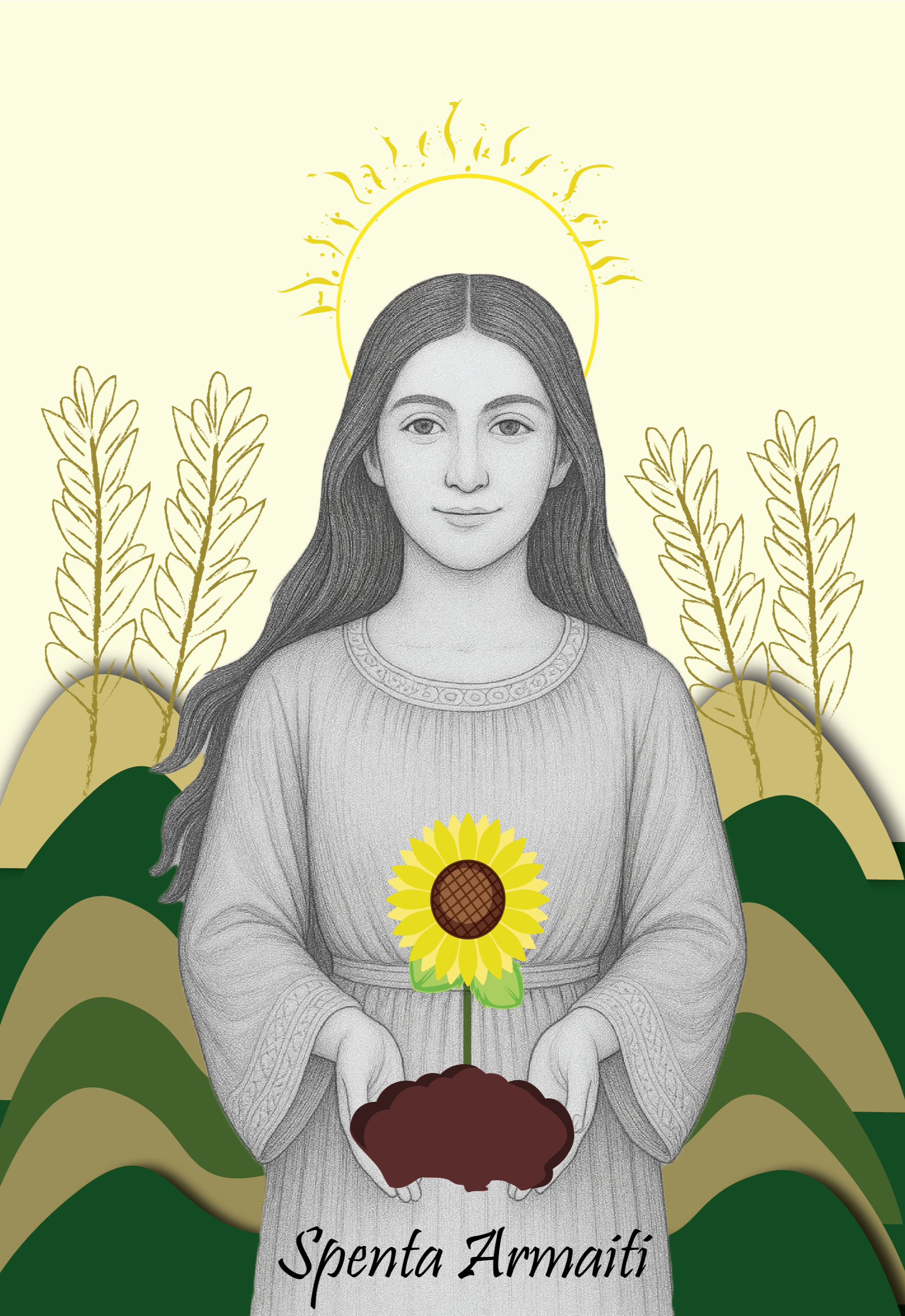
Spenta Armaiti
Holy devotion. Holds the earth.
-
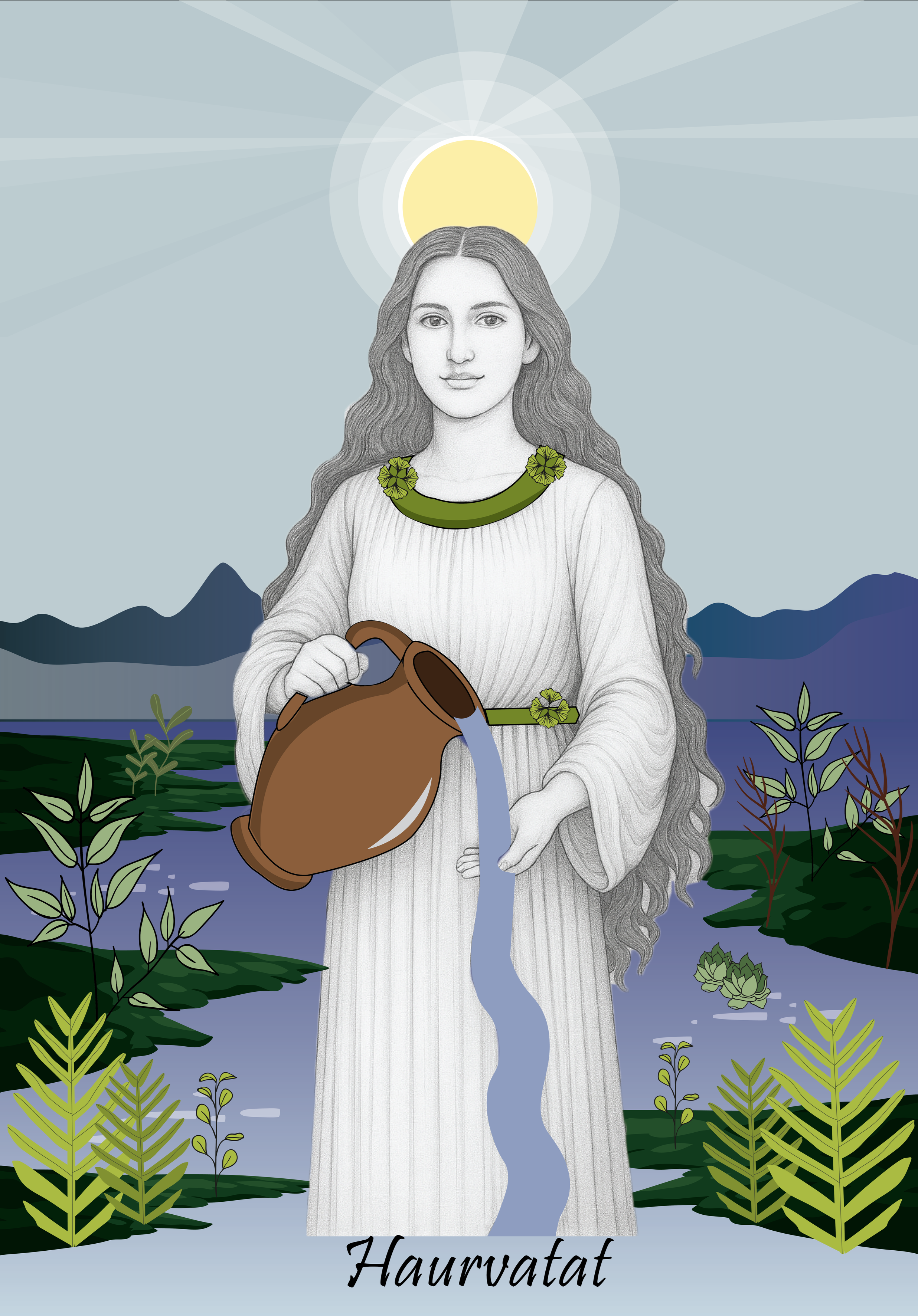
Haurvatat
Wholeness. She pours water, all life.
-
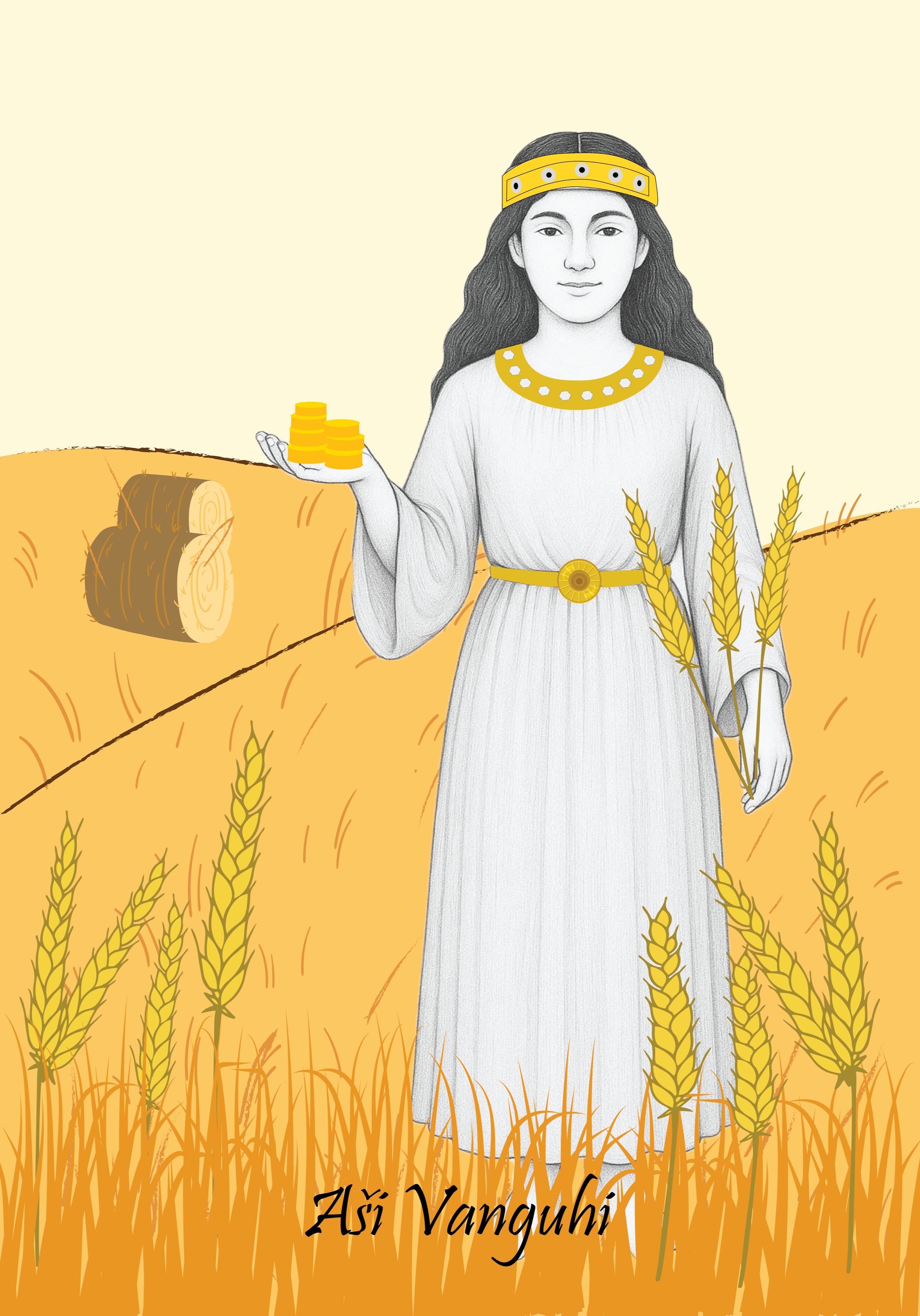
Aši Vanguhi
Abundance. Gold coins in a wheat field.
-
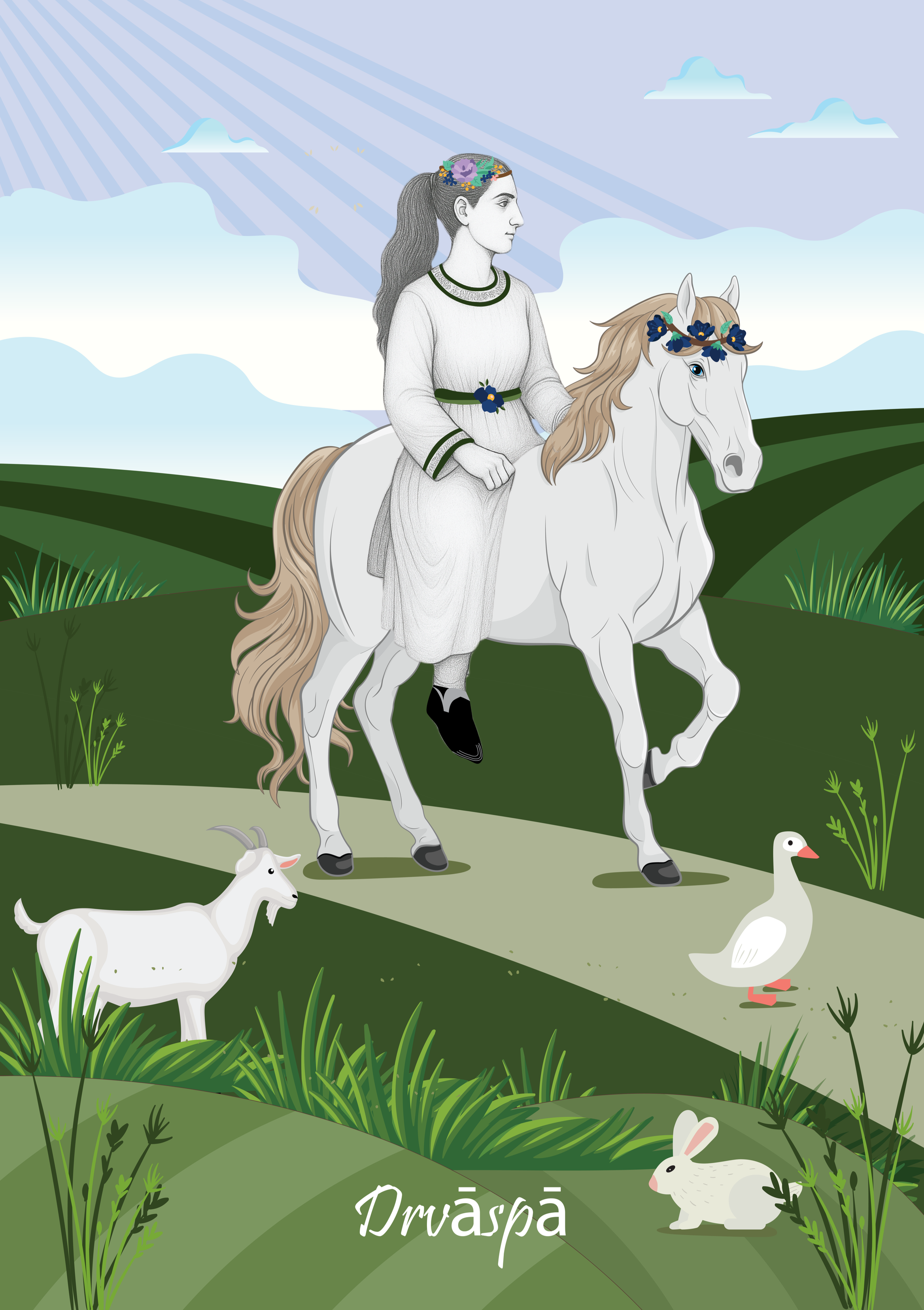
Drvāspā
Keeper of animals. Rides through green fields.
-
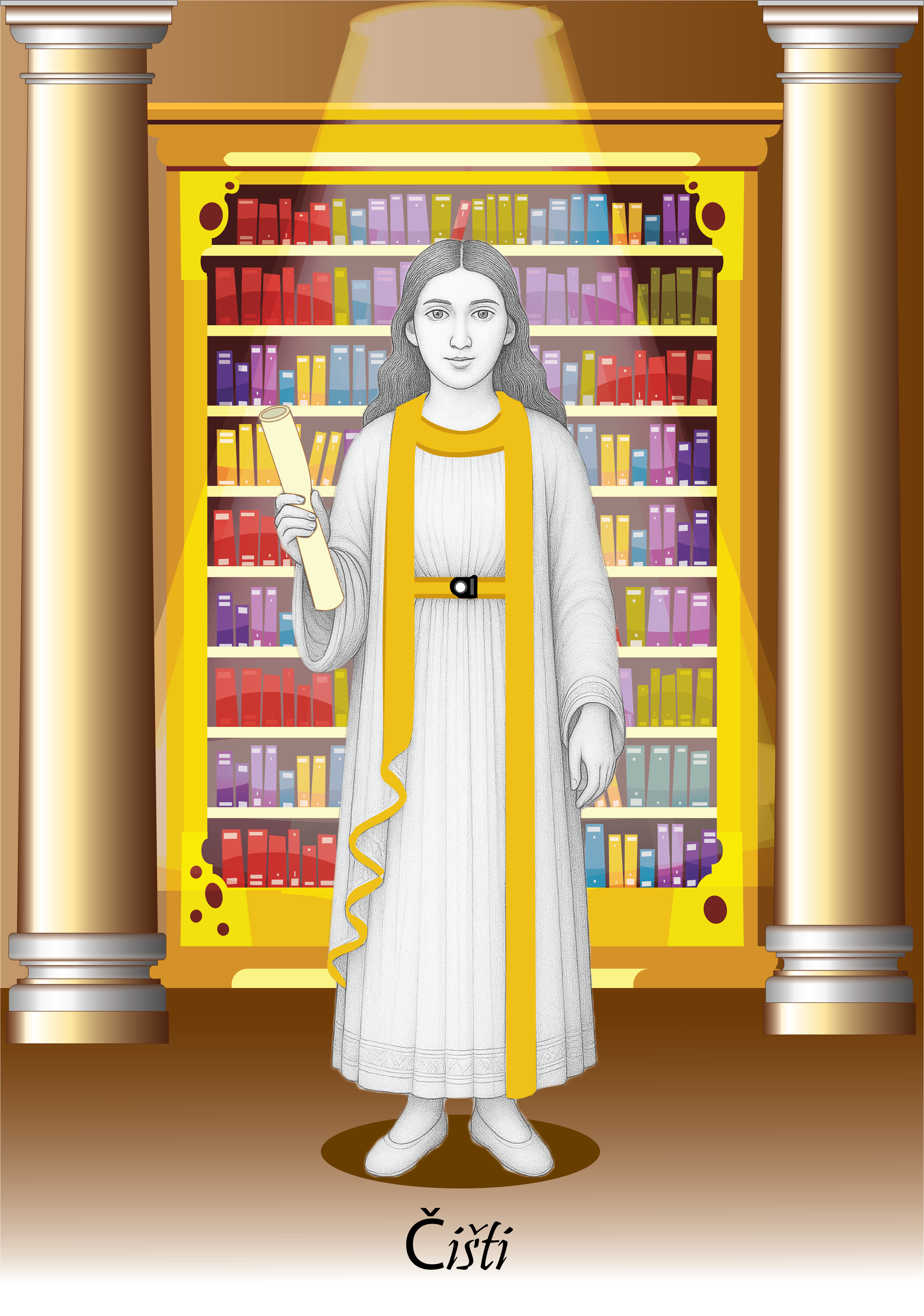
Čišti
Wisdom. Guardian of knowledge and scrolls.
-
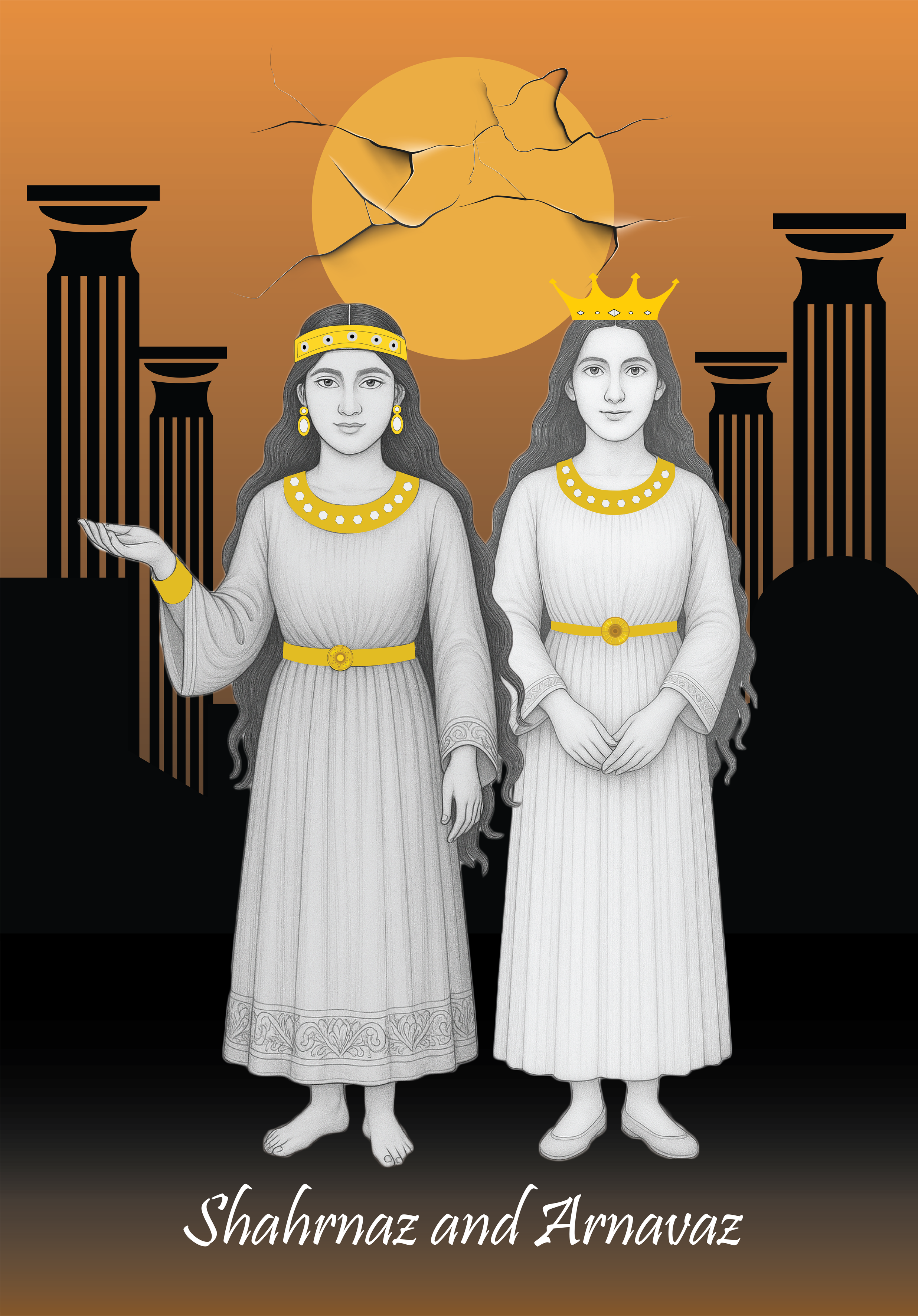
Shahrnaz & Arnavaz
Two royal sisters. Survived to restore the king.
The visual system — how it works
Same rules. Different worlds.
Every figure is drawn in pencil- grey, detailed, quiet. Every figure wears white robes. Every figure has her name written in the same script at the bottom. These three rules are the system.
Everything around her changes. The colour palette, the landscape, the symbols, the atmosphere — all of it belongs exclusively to that woman and her story. Gordiyeh gets a battlefield at dusk. Haurvatat gets a river and lush botanicals. Rabīa Balkhī gets roses and a single drop of blood.
-
Pencil figure · white robes · script name · centred composition
-
Colour palette · landscape · symbolic objects · mood · era
-
600 BCE Zoroastrian scripture → 9th century AD medieval poetry
Figures in detail
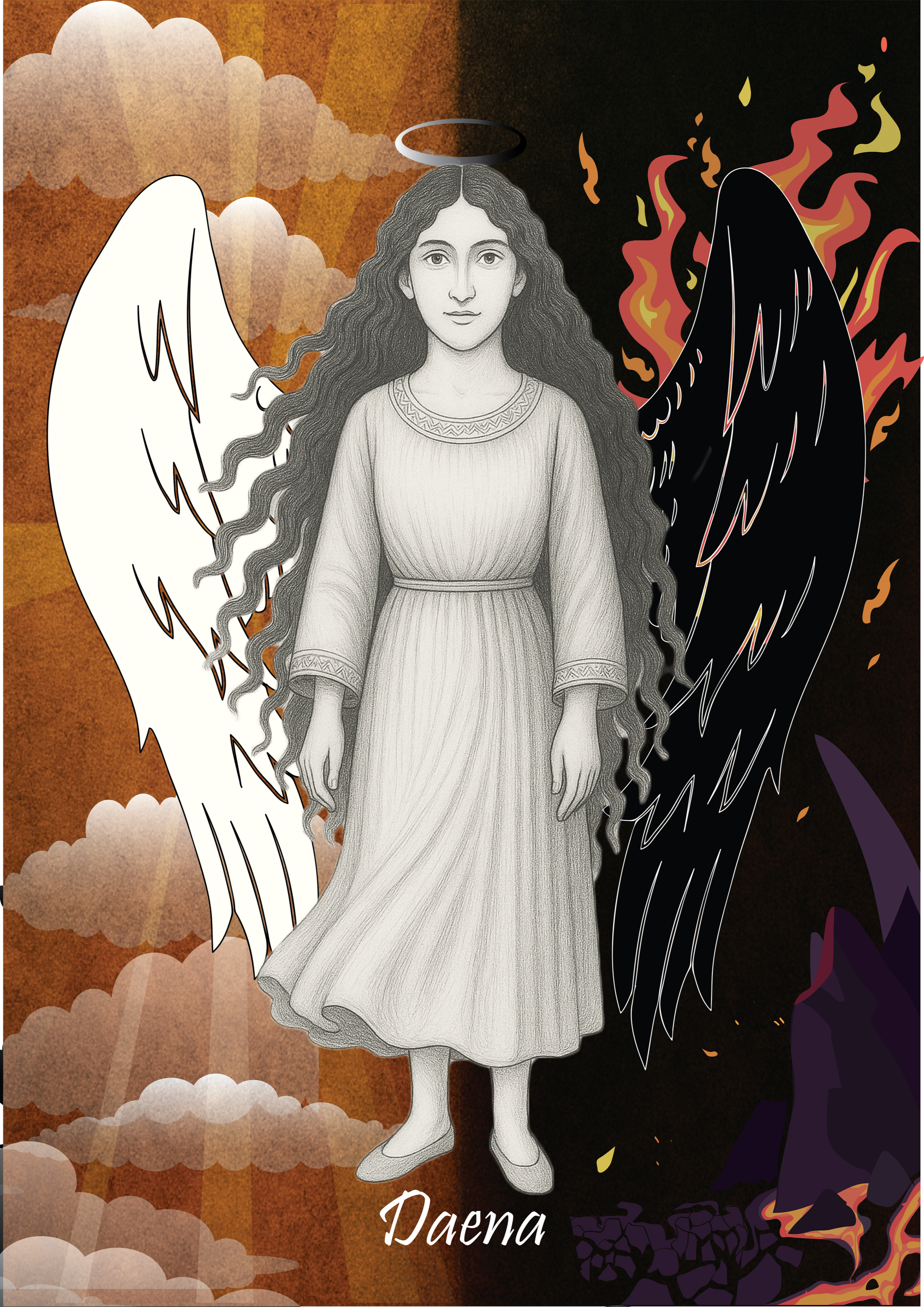
Daena
Conscience
In Zoroastrian belief, Daena meets your soul after death — beautiful if you lived well, terrifying if you did not. One white wing, one black wing engulfed in fire. The split composition — warm amber on one side, darkness and flame on the other — is the central visual tension of the series.
Anahita
Goddess of water
One of the oldest figures in Persian religion — goddess of water, fertility, wisdom, and war. Described in the Avesta as riding a chariot pulled by four horses named Wind, Rain, Cloud, and Sleet. The four horses fill the lower half of the poster; Anahita serene and crowned above them..
Rabīa Balkhī
The poet
The first woman to write poetry in the Persian language, in the 9th century. Imprisoned for falling in love, she wrote her final poem on the prison walls in her own blood. A single red drop falls from her chest — the only colour on an otherwise grey figure — while flat bright roses fill the world around her.
Gordiyeh
The warrior
A warrior princess from Ferdowsi's Shahnameh who refused to submit to an enemy king. The only figure in the series shown in motion — mid-stride across a battlefield — because she was never still. Purple and red dusk, broken swords, a pink moon.
"These women existed. They acted. That is what makes them heroic."
Bachelor's thesis · Graphic Design · Vistula University · Warsaw · 2026
Supervised by mgr Anna Dybowska